Jensen Huang’s visit to Astana puts Kazakhstan’s plan to become a global Physical AI hub in front of the international tech industry. The plan rests on the country’s energy resources, its heavy industry and a fast-growing AI ecosystem.
Kazakhstan aims to become a global center for Physical AI. This next generation of artificial intelligence brings together robotics, autonomous systems and industrial automation. The strategy was the main theme of today’s visit to Astana by Jensen Huang, founder and CEO of NVIDIA.
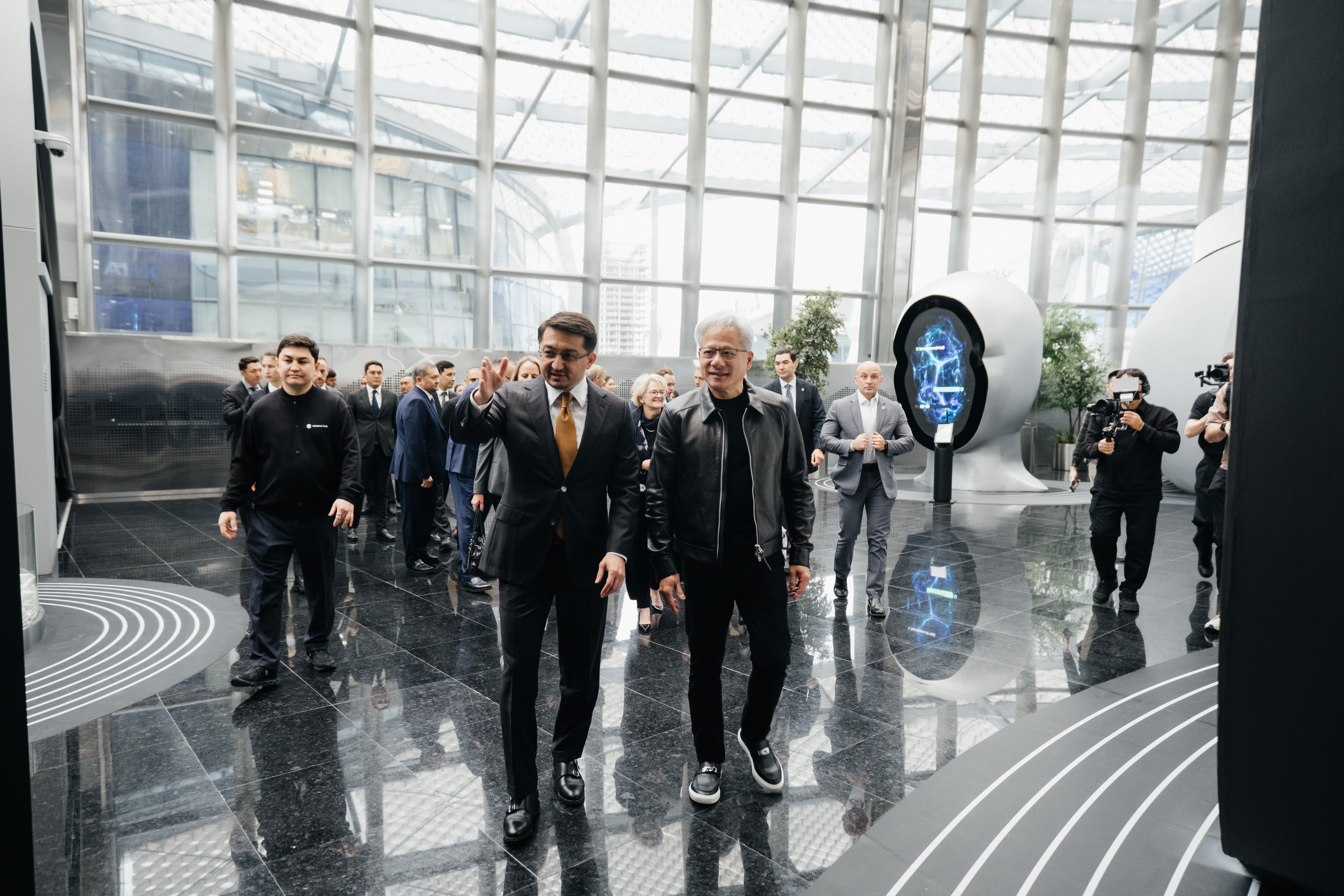
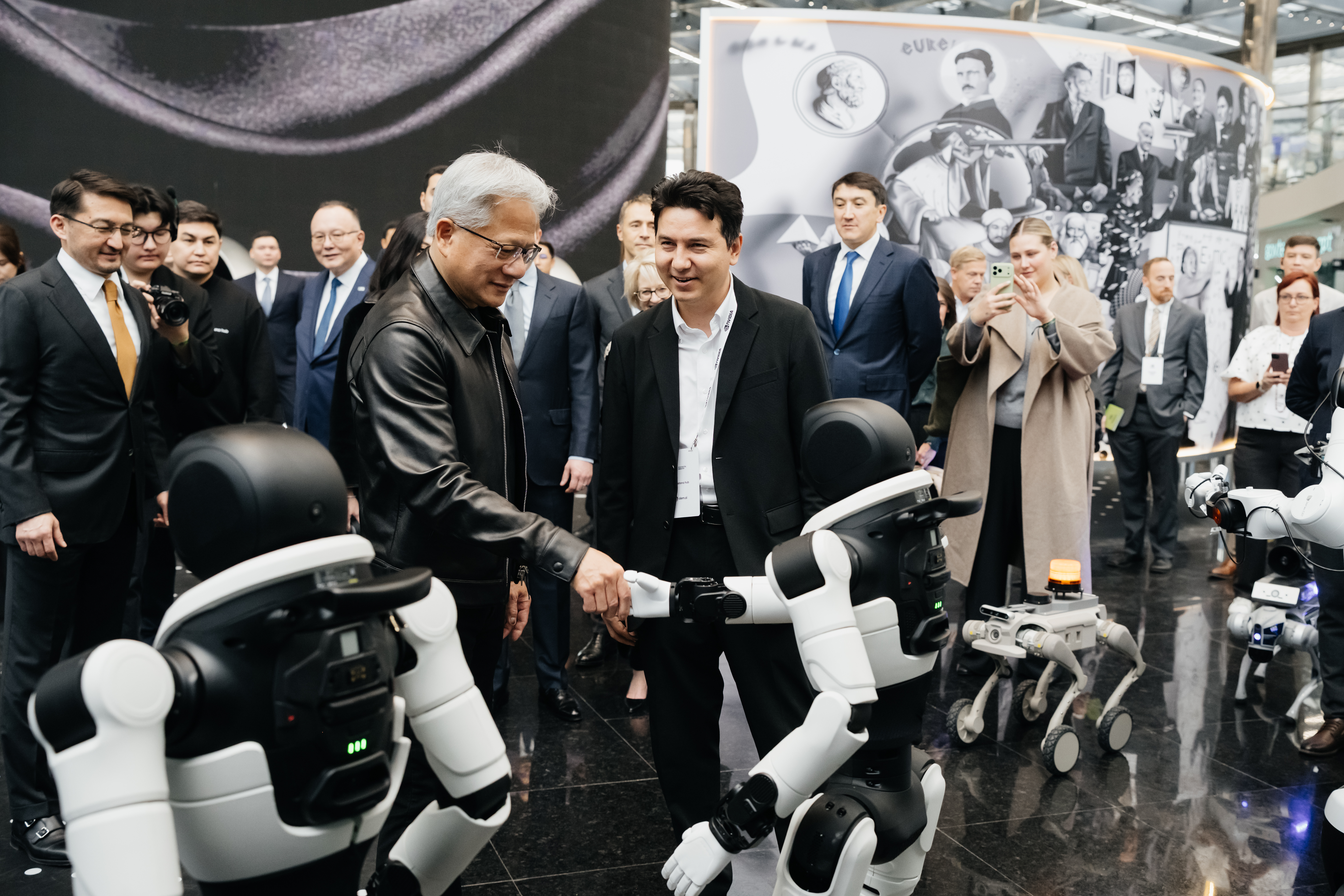
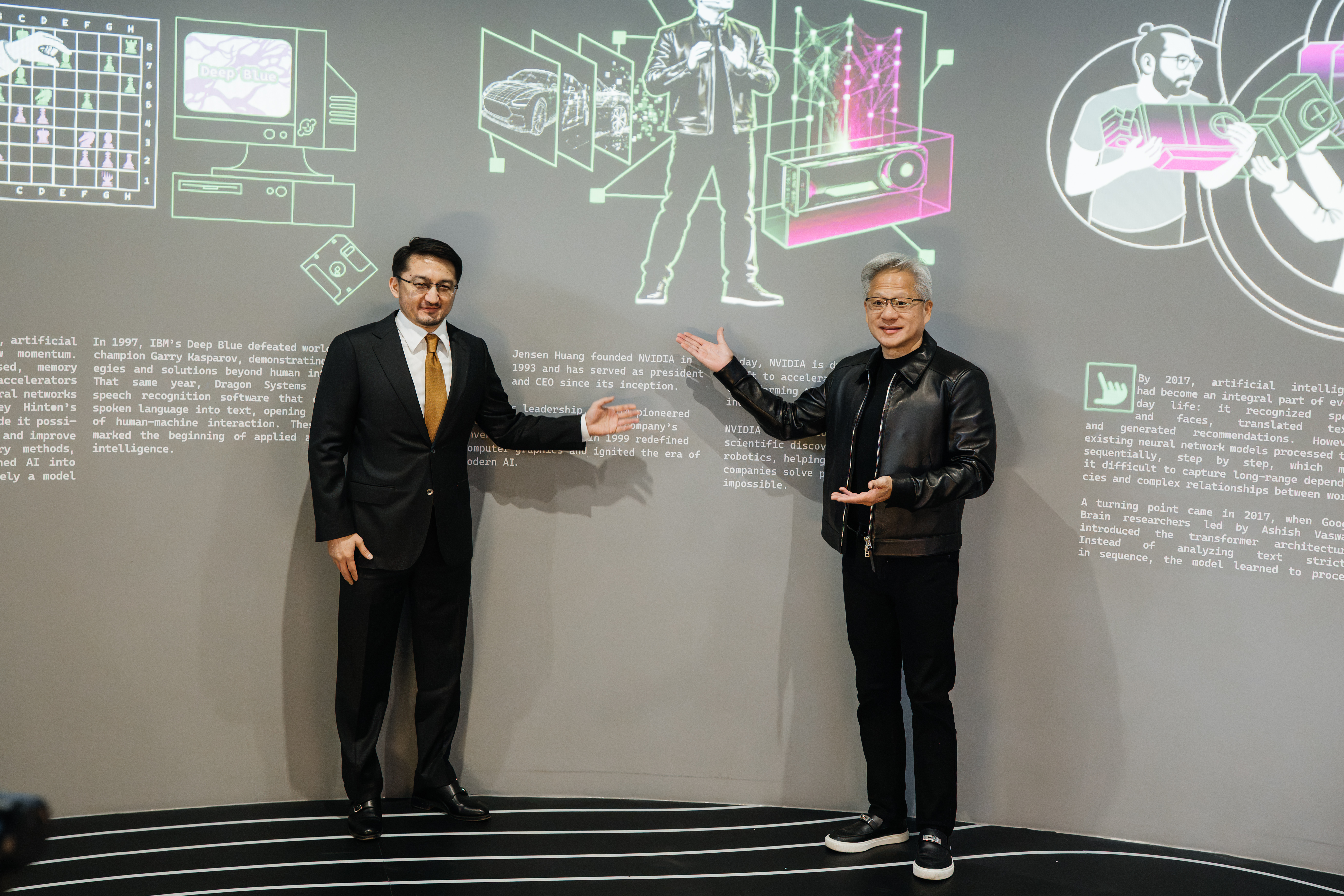
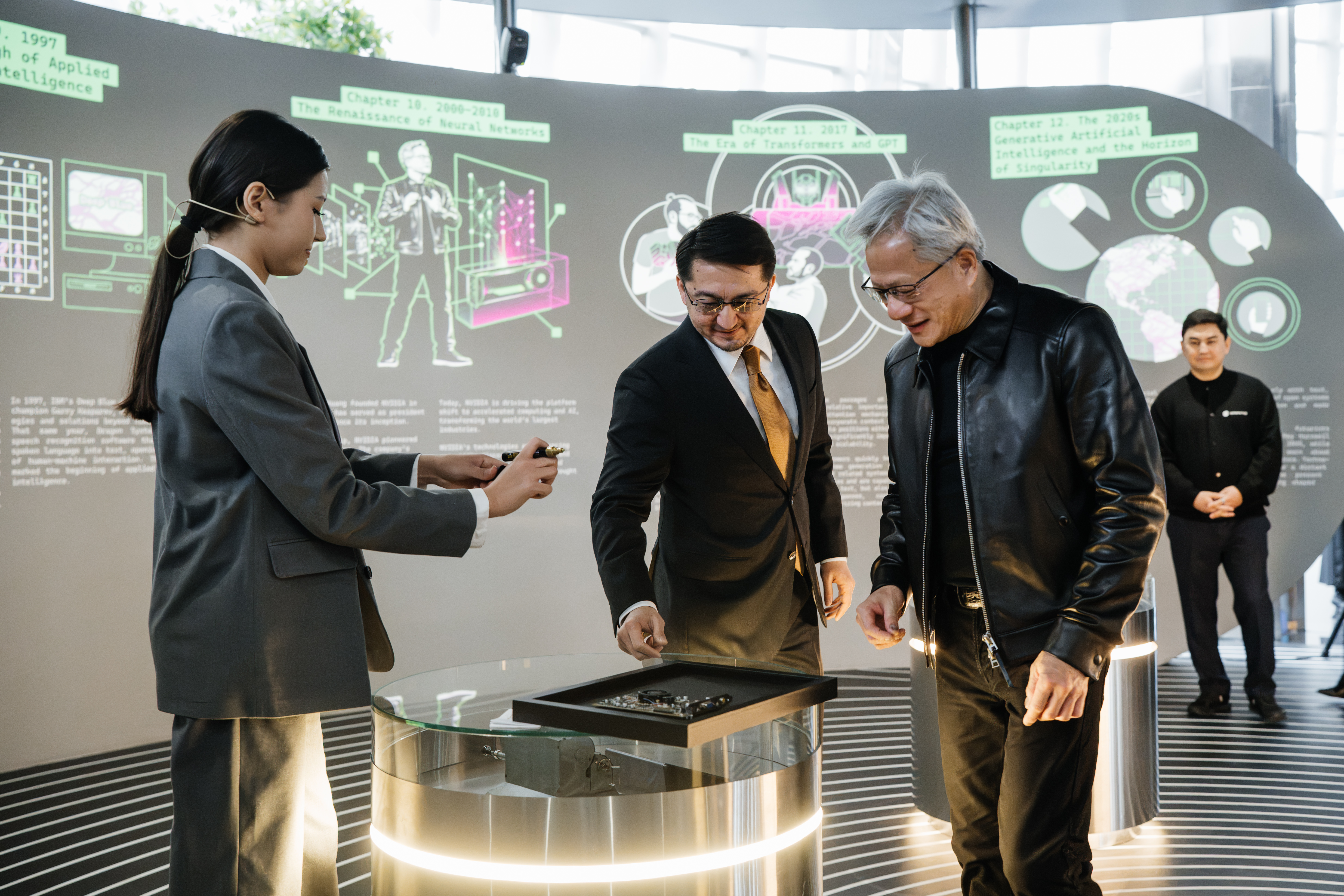
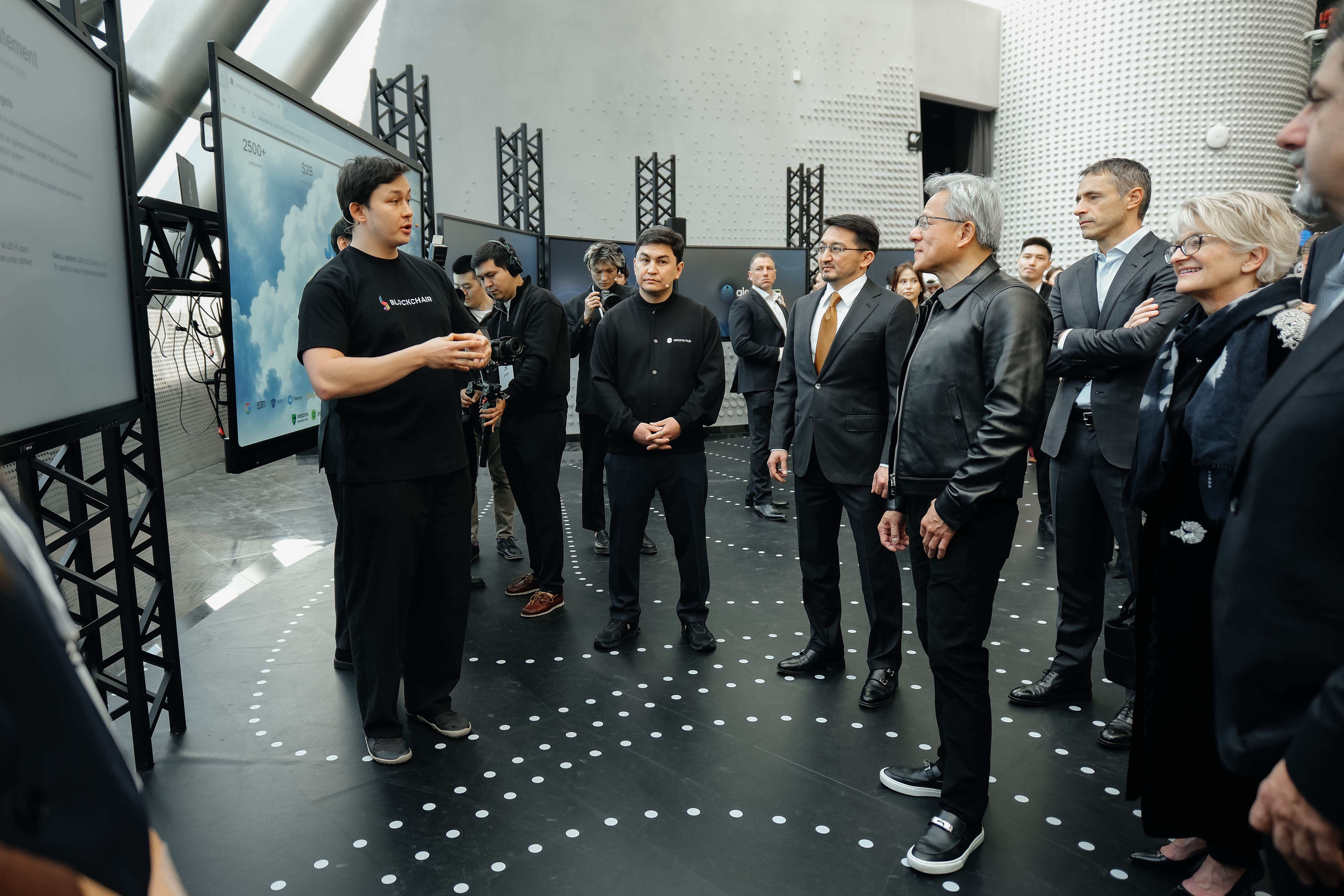
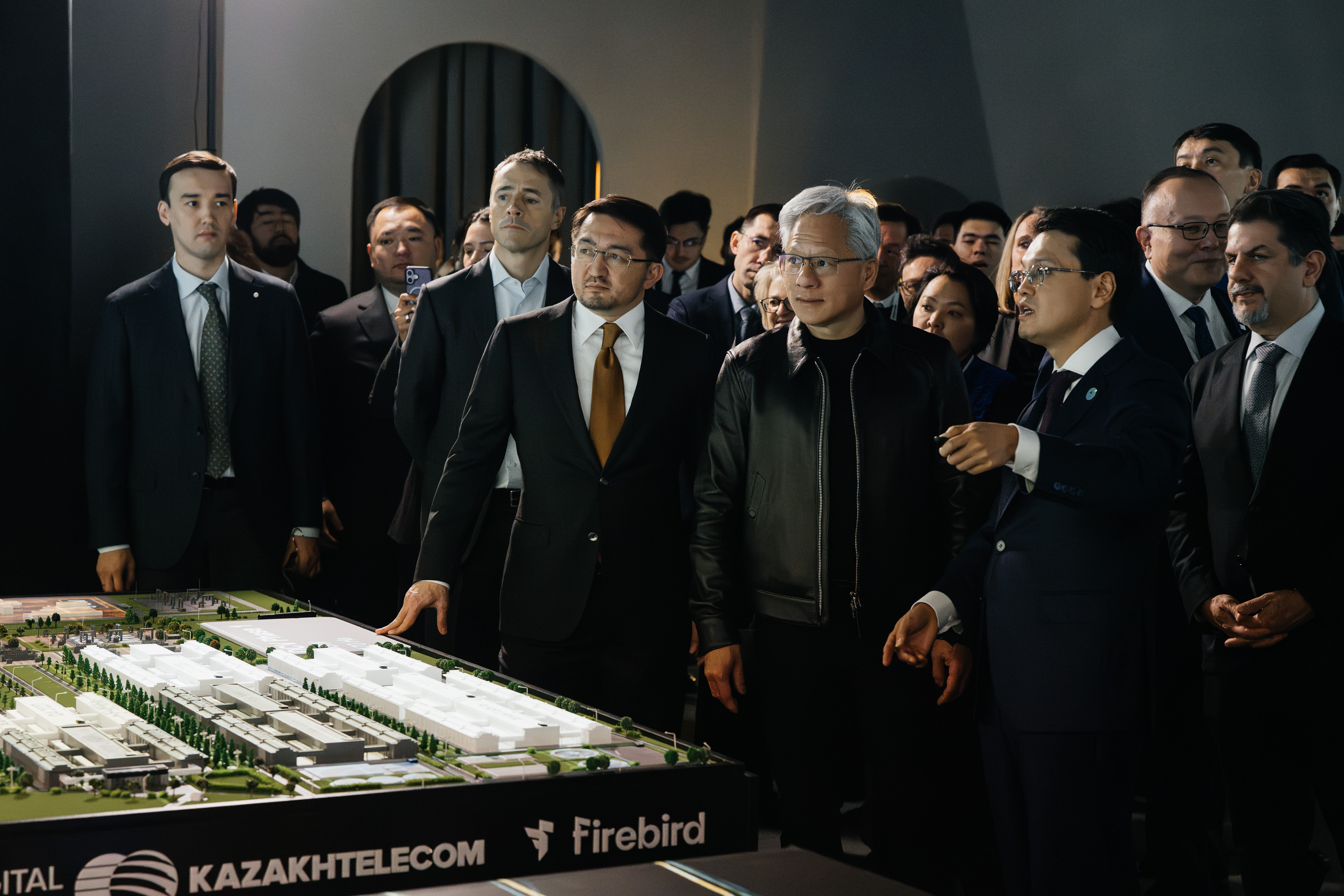
Mr. Huang came at the invitation of Zhaslan Madiyev, Deputy Prime Minister and Minister of Artificial Intelligence and Digital Development of the Republic of Kazakhstan. At alem.ai, the International Center for Artificial Intelligence in Astana, he was briefed on the national AI strategy and the country’s sovereign compute infrastructure. He also saw its talent programs and products built by Kazakhstani technology companies.
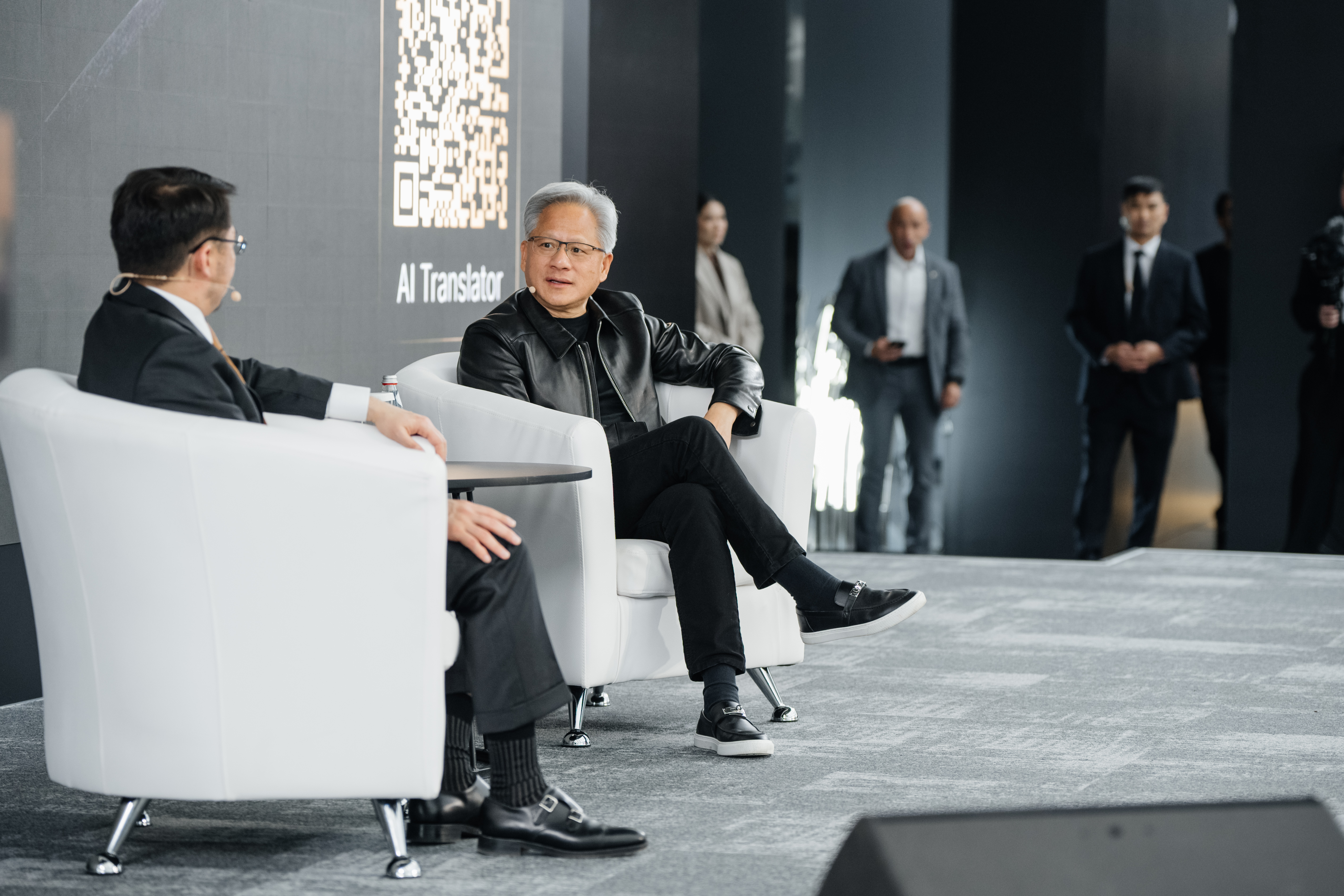
The visit centered on a fireside chat between Mr. Huang and Deputy Prime Minister Madiyev. They discussed where the global AI industry is heading and why energy and compute have become strategic resources. They also covered the rise of Physical AI and how a country of 20 million people can produce technology companies that compete worldwide.
"Kazakhstan is the first country I have visited where the President has declared AI development a national priority. Artificial intelligence will help your country rise to a new level, empower people, and enable companies to compete and scale in the global market. AI will transform your society. If you have aspirations and ambitions, you need leadership that helps shape them. That is exactly the ambitious goal President Tokayev has set: to make Kazakhstan an AI nation. Every company I met today wants to be successful, global, and international, and artificial intelligence will help turn those ambitions into reality. The only thing that matters is whether you have ambition. If you do, artificial intelligence and robotics will help you reach a new level and expand what you can do. If you are a scientist, an AI assistant will let you explore far more. If you are an engineer, AI tools will help you find better technical solutions," Jensen Huang said.
A country building its digital future at speed
The visit comes as Kazakhstan carries out one of the most ambitious digital transformation agendas in the region. President Kassym-Jomart Tokayev has set the goal of turning Kazakhstan into a fully digital country, with AI as a driver of economic growth. In 2025 the government created a dedicated Ministry of Artificial Intelligence and Digital Development. Kazakhstan was also among the first countries in the region to adopt a comprehensive law on artificial intelligence.
That work builds on a decade of digital progress. Kazakhstan’s eGov platform is consistently ranked among the most advanced public digital services in the world, and most government services are available online. The country’s fintech, e-commerce and govtech sectors have become regional benchmarks.
Why Physical AI, and why Kazakhstan
Physical AI is becoming one of the defining frontiers of artificial intelligence. Generative models mainly work with digital content. Physical AI lets machines perceive the real world, reason about it and act in it. It powers autonomous robots, smart factories, self-driving systems and industrial digital twins.
Kazakhstan has an unusual combination of strengths for this field:
- Energy. It is one of the world’s major energy producers and the largest producer of uranium. It also has large wind and solar potential.
- Heavy industry at scale. Its mining, metallurgy, oil and gas, and logistics sectors are real-world environments where intelligent systems can be trained, tested and deployed.
- Strategic geography. As a crossroads between Europe and Asia on the Trans-Caspian “Middle Corridor,” it is a natural testbed for autonomous logistics.
- Critical minerals. Its reserves supply the global robotics and electronics value chain.
Together, these strengths let Kazakhstan offer something few countries can: an international platform for developing, training and testing industrial AI in real operating conditions. Global technology companies would get access to real industrial use cases and test sites. Kazakhstan would get faster industrial modernization, higher productivity and safer workplaces. It would also attract international developers and build new high-tech industries.
“Kazakhstan has set itself an ambitious goal: to become one of the world’s centers for Physical AI. We are building the conditions step by step: expanding our compute infrastructure, investing in talent and creating an environment where technology companies can thrive. Our collaboration with NVIDIA opens opportunities to apply advanced AI in industry, energy, transport and robotics. Our ambition is not only to adopt existing solutions, but to create our own technologies that compete on the global market,” said Zhaslan Madiyev, Deputy Prime Minister and Minister of Artificial Intelligence and Digital Development of the Republic of Kazakhstan.
From energy resources to global AI infrastructure
As demand for AI grows, access to energy, high-performance computing and data centers has become strategically important worldwide. Kazakhstan is investing to become a supplier of these resources:
- Alem.Cloud is a national supercomputer built on NVIDIA H200 GPUs and ranked among the world’s top 100 supercomputers. AI-Farabium is a computing complex in Almaty.
- Data Center Valley in Ekibastuz is a planned data center cluster with an initial capacity of 250 MW, expandable to 1 GW.
- In June 2026, Kazakhstan announced a package of AI infrastructure agreements worth about $10 billion. The plans include a large-scale compute cluster of up to 100,000 GPUs based on NVIDIA technologies.
Kazakhstan’s goal goes beyond building data centers. The country wants to turn its energy and compute into new technology products, skilled jobs and export revenue. It aims to be a place where AI is built, not just hosted.
Kazakhstani AI startups go global
Higgsfield shows how far the ecosystem has already come. The company builds generative AI tools for video creation and has reached unicorn status. According to figures the company has presented, its valuation has passed $9 billion. Its annualized revenue reached $1 billion 18 months after launch, and it processes more than 10 trillion tokens per month. More than 600 employees work in Kazakhstan.
“The first thing and the last thing is that you invest in people, not companies. The founders of Higgsfield are visionaries in the work that they do. They had a wonderful idea, and it's not easy to execute, especially when you're competing globally against incredibly well-funded companies with formidable expertise. But these are some of the brightest people in the world. They have 600 people here in Kazakhstan, with an average age of 25. Many of them are deep-tech engineers and computer scientists. With offices in Kazakhstan and the United States, they're able to bridge the cultures and expertise of two nations and compete globally. When you're investing in a company, you're really investing in people. And you have to select the best people,” said Jensen Huang, Founder and CEO of NVIDIA.
Higgsfield shows that teams based in Kazakhstan can build products for the global market. That brings in international investment, creates domestic intellectual property and adds high-value jobs for engineers. Astana Hub, international innovation cluster, supports this pipeline. It helps startups raise capital, scale and enter global markets. International programs such as NVIDIA Inception give them access to technology and expertise.
Investing in talent
Human capital is a pillar of the national AI strategy. alem.ai is home to TUMO Astana and Tomorrow School, which train the next generation of engineers in coding and digital skills.
Planned collaboration with NVIDIA includes education initiatives with alem.ai, Astana Hub, QAIRU and Kazakhstan’s leading technical universities. One option under discussion is a regional NVIDIA Deep Learning Institute (DLI) center at QAIRU. Representatives of 12 technical universities have already taken part in a DLI pilot program.
“Jensen Huang’s visit to Astana and alem.ai opens up new opportunities for Kazakhstan’s tech companies. This is particularly relevant to Physical AI technologies that bring together artificial intelligence, robotics, industry and infrastructure. Startups in Kazakhstan are already developing solutions in robotics, autonomous control and intelligent systems. Our goal is to create an environment where these teams have access to infrastructure, expertise and international partners, enabling them to advance their technologies and bring them to global markets,” said Magzhan Madiyev, CEO of Astana Hub.
The finale of AI Month
The visit closed AI Month, a series of international AI events in Kazakhstan with NVIDIA as general partner. The program opened on September 23 with HackAlem AI, an international hackathon for building AI agents. It set a GUINNESS WORLD RECORDS™ title for the largest number of participants in an AI hackathon.
Jensen Huang’s visit marks a new stage in Kazakhstan’s international AI partnerships. The country’s strategic goal is to become a global center for Physical AI, where energy, industry, compute and engineering talent come together to build the next generation of technology. The aim is to attract global investment and technology companies, speed up industrial modernization and open new sources of economic growth.