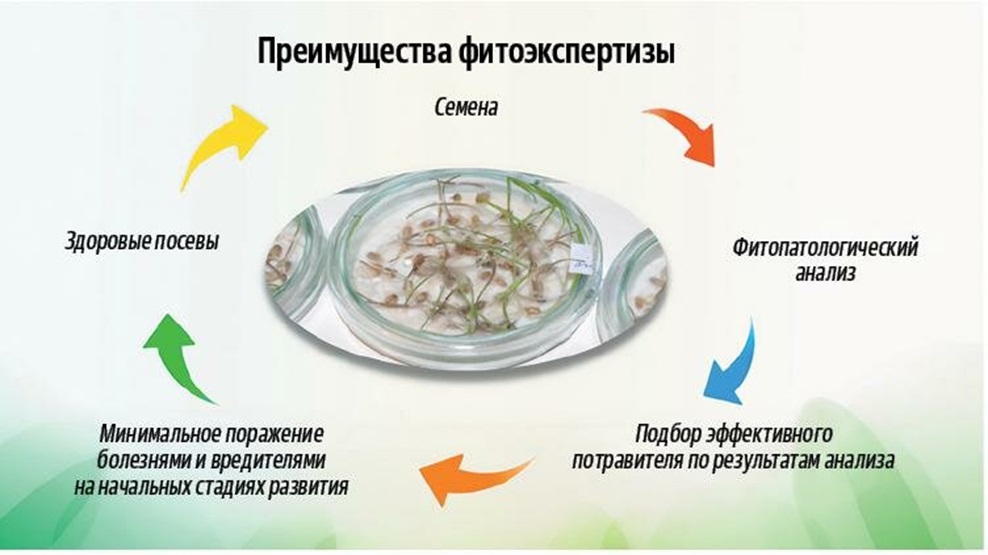
High seed quality has always been considered a fundamental agronomic requirement. It is precisely this quality that, under optimal conditions, ensures consistent and high yields. However, both the surface and the interior of seeds can harbor sources of numerous disease-causing agents. Mineral substances and proteins—which serve as an excellent nutrient substrate for pathogenic fungi and bacteria—act as an attractant for these pathogens.
Phytoanalysis makes it possible to monitor the spread and development of pathogens that affect seedlings and young plants—nipping the problem in the bud, so to speak.
Phytosanitary examination of seeds is a crucial component of seed quality control, carrying as much weight as the assessment of germination capacity, growth vigor, and other agronomic indicators. In a laboratory setting, such an examination determines whether seeds are infected, identifies the specific fungal or bacterial pathogens present, and assesses the degree of infestation. With these results, agricultural producers can determine whether their seeds are carrying pathogens, identify the specific types, calculate the percentage of infected seeds, and distinguish between internal and surface-borne infections. Consequently, farmers must take the phytosanitary examination of their planting material very seriously. Seeds have always been, and will continue to be, a source of pathogenic microflora that can infect plants from the very moment of germination—inevitably leading to yield losses later on. Issues such as reduced germination due to loose smut in wheat and barley, contamination with mycotoxins (e.g., *Fusarium*), thinning of crops caused by damage to or death of the root system (due to *Alternaria*, bacterial infections, or *Fusarium* and *Helminthosporium* root rots), and a decrease in the number of productive stems all result in significant yield losses and poorer grain quality. If pathogens are present in the seed stock, losses can reach as high as 50%. Furthermore, the delicate outer layers of primary roots and seedlings provide an easy entry point for soil-borne pathogens to invade the plant.
To select the appropriate seed treatment, one must understand the biology of the pathogen. Both contact and systemic agents are used to effectively protect seeds and plants from diseases during the early stages of growth. Contact-acting seed treatments are necessary to combat infections present on the seed surface or beneath the seed coat, as well as to block pathogens attempting to enter from the soil (such as *Fusarium* species, common bunt, *Helminthosporium* diseases, *Ascochyta* blight, root rot pathogens, *Cercospora* leaf spot, etc.). Systemic seed treatments, by contrast, are effective against pathogens that reside within the seed itself (such as *Fusarium* species, loose smut, and *Alternaria* species).
In addition to the results of a phytosanitary analysis of the seeds, several other factors should be considered when deciding whether to apply a seed treatment: the crop’s position in the rotation, the current phytosanitary status of the fields, and forecasts regarding the development and spread of diseases for the upcoming season. Proper preparation of seed material and the selection of the "right" seed treatment offer a practical way to prevent disease outbreaks in the field and ensure the emergence of healthy, robust seedlings.
*Helminthosporium* and *Fusarium* species can cause root rots, which reduce seed germination and damage the root system during its initial formation, leading to a thinning of the crop stand. Plants affected in this way produce fewer productive stems. The pathogen is typically found on the surface of the seed.
Bacterial diseases (bacterioses) can cause seeds to rot in the soil, particularly under damp conditions. The bacteria may be present on the seed surface or within plant debris. Bacteriosis is a general term for diseases caused by various bacteria; such infections are widespread across all agricultural regions. Bacteriosis affects seeds and all other plant organs during the growing season, potentially leading to partial or total plant death, incomplete crop maturation, reduced yields, and diminished produce quality. Depending on the specific type of bacteriosis and the stage of disease development, total crop losses can range from 15% to 80%.
The bacteria responsible for bacteriosis remain active across a wide temperature range; however, depending on the specific type, they can proliferate rapidly and extensively between +2°C and +40°C. High humidity serves as an additional factor that promotes the development of this disease.
Seed mold is caused by fungi from the genera *Penicillium* and *Aspergillus*, which typically manifest when grain germination is prolonged. These are surface-borne pathogens. The disease is ubiquitous in regions where cereal crops are cultivated and can reduce germination rates by as much as 70–75%. These pathogens are essentially omnipresent. Grain can become infected during the maturation phase, particularly under conditions of high humidity and low temperatures.
Loose smut is an internally seed-borne infection, with spores residing within the endosperm, whereas the sclerotia (spore masses) of common (bunt) smut can be visually identified in seed stock. Winter cereals are more susceptible to common smut than to loose smut. Modern crop varieties are generally resistant to loose smut, making its occurrence in fields extremely rare. The development of common smut is dependent on specific weather conditions. Loose smut is spread by the wind; given the prevalence of grassy weeds surrounding wheat fields, there is a high probability that spores will contaminate the harvested grain. Why is it important to conduct a phytopathological analysis of seeds and carefully select a seed treatment product? The active ingredient in the product must correspond to the specific pathogens identified during the seed analysis. Furthermore, the chosen treatment should not only control seed-borne infections but also provide protection against soil-borne pathogens during the germination stage. Ideally, the fungicidal seed treatment should offer the longest possible duration of protection. It is essential that the product be of high quality; therefore, it should be purchased only from trusted suppliers and reputable manufacturers.
Based on the results of the phytopathological analysis, specialists from local district offices will provide a phytosanitary assessment and recommendations for seed treatment. They will assist you in selecting the most effective products to combat specific pathogens and provide guidance on application rates and proper usage methods.